
Hair changes rarely occur in isolation
Hair follicle function is shaped by the body’s interconnected physiology
Hair Growth is
Both High Maintenance
and a Biological Luxury
Hair growth is a biological luxury because it is not essential for immediate survival. At the same time, it is highly demanding, requiring a steady supply of oxygen, nutrients, and growth factors to sustain rapid cellular turnover.
When the body is under significant or prolonged stress, it reallocates energy and key nutrients away from non-essential cellular growth and toward the vital organs and processes required for survival. Hair growth is one of the first processes deprioritized internally and one of the first visible signs of that shift.
Because of this sensitivity, changes in hair density, growth rate, or fiber quality can reflect broader physiological stress before other symptoms become apparent.
Guided by GeroscienceNutrition as a Biological Signal
Food is broken down into nutrients that function not only as building blocks, but also as signaling molecules that help direct cellular activity.
These nutrient-derived signals influence metabolic regulation, hormonal signaling, inflammatory tone, cellular maintenance, and gene expression.
Through these nutrient-sensing and signaling pathways, nutrition helps shape how the body balances energy production, growth, repair, adaptation, and resilience over time.
The Hair Cycle & Follicle Function
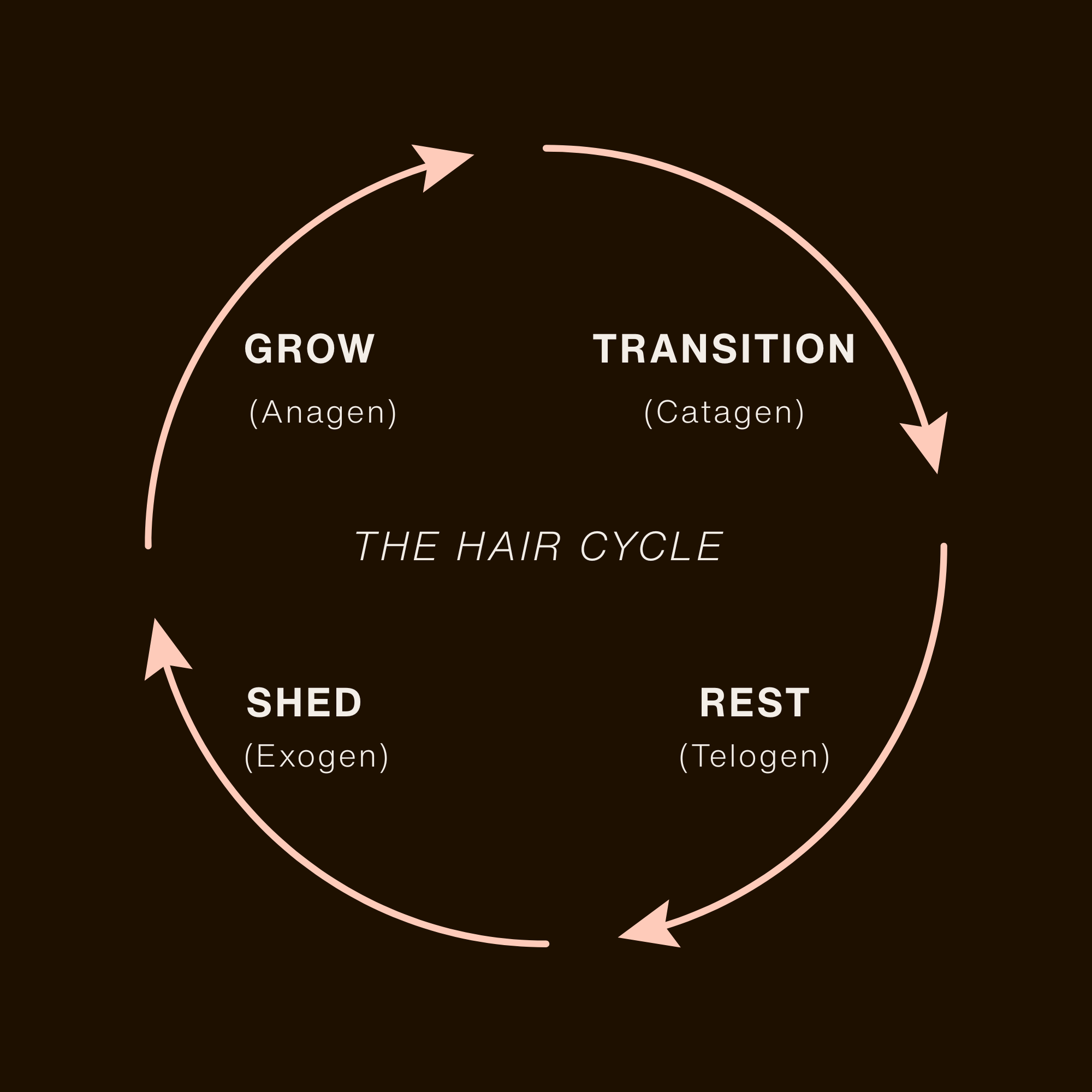
Hair follicles do not simply grow and shed. They move through a regenerative cycle with distinct phases: active growth, regression, rest, and shedding.
Each follicle cycles on its own timeline. Overall hair density, length, fiber quality, and shedding patterns are ultimately shaped by specialized cellular activity within individual follicles and the conditions of their surrounding microenvironment.
Anagen is the active growth phase, with the most rigorous demands in the cycle. Only during this phase is the follicle fully connected to an active blood supply, giving it access to the nutrient-rich blood essential for sustaining rapid cell division.
To enter into and maintain anagen, hair follicles depend on a coordinated set of biological conditions, each supporting a distinct aspect of growth:
Sufficient Energy and Specific Nutrients
Microvascular Support and Oxygen Delivery
Redox Balance
Immune Regulation
Growth-Promoting Signals
When these conditions are disrupted, the environment is no longer conducive to growth, and follicles are likely to shift prematurely into the resting phase. Because these inputs are sensitive to daily internal demands, they can become harder to maintain as physiological stress and age-related changes accumulate over time.
Sustaining hair growth and producing strong hair fibers depends on the health of the cells within the hair follicle and their surrounding microenvironment, as well as the systems that deliver and regulate what the follicle needs for active growth.
What Shapes Follicle Function
A closer look at the interconnected systems and processes that shape how hair follicles behave and adapt in response to changing conditions over time.
-
Hair follicles live in an active immune environment and depend on regulated inflammatory signaling to maintain growth.
During anagen, the follicle maintains a degree of immune privilege, allowing proliferative activity to take place with reduced immune surveillance.
Chronic inflammation and a dysregulated immune system can break down this privilege, leaving the growing hair exposed to immune attack, which contributes to certain forms of hair loss.
Stress and metabolic dysregulation can contribute to the breakdown of this privilege, because the nervous system and immune system are tightly linked and stress signaling drives inflammatory pathways.
Chronic inflammatory signaling can also impair the absorption and utilization of crucial nutrients for hair follicle function such as iron. Inflammation drives hepcidin, which can reduce usable iron even when intake is adequate. Because iron status influences hair growth, inflammation matters even when intake looks fine.
Upstream of it all, nutrition shapes inflammatory tone through gut barrier integrity, microbiome composition, and the inflammatory response to each meal.
-
Hair follicle function is closely regulated by hormonal signaling, and the hair cycle is influenced not only by these signals but by how consistently they occur.
Key regulatory signals influence growth and timing, including sex hormones, thyroid hormones, insulin and insulin-like growth factor 1 (IGF-1), cortisol, and melatonin. Thyroid hormones in particular help set the pace of the hair cycle, while insulin resistance can shift the signaling environment in ways that affect follicle function.
Just as with all cells within the body, the cells that make up the hair follicle follow a circadian rhythm. Scalp follicles have been shown to contain intrinsic circadian clocks, with CLOCK genes helping regulate the timing of cellular activity and growth within the hair cycle.
Hormonal signaling can become disrupted through circadian misalignment, chronic stress, metabolic impairment, nutritional status, endocrine conditions, and age-related changes.
Sudden or progressive imbalances in these signals can shorten anagen, alter the rate of cycling, or progressively miniaturize the follicle. This is seen in conditions like androgenetic alopecia and thyroid-related shedding.
Meal timing, composition, and nutrient distribution all influence hormonal and circadian signaling.
-
The rapid cell division that occurs during anagen increases both mitochondrial activity and metabolic demand.
Reactive oxygen species (ROS) are a normal by-product of cellular growth. While ROS play a role in normal cellular signaling, excessive oxidative stress or insufficient antioxidant defenses can disrupt cellular balance and affect follicular function.
When oxidative stress accumulates or mitochondrial function becomes impaired, follicular cells may have a harder time meeting energy demands, contributing to changes in the local environment and hair cycling over time.
Mitochondrial function and redox balance are closely linked to broader metabolic and cellular maintenance processes that support tissue renewal.
Aging is associated with a rise in ROS levels. Diet and lifestyle patterns also influence overall oxidative load and the body’s ability to maintain redox balance, including pathways involved in endogenous antioxidant defense such as NRF2-mediated signaling, as well as exposure to compounds like polyphenols and sulfur-containing nutrients that support cellular resilience.
-
Maintaining anagen depends on both adequate capillary-level circulation and regulated metabolic signaling.
Microvascular circulation delivers oxygen and nutrients to the base of the hair follicle, while cardiometabolic pathways, including insulin and insulin-like growth factor-1 (IGF-1), influence how those nutrients are utilized by proliferating cells.
Signals like nitric oxide (NO) and vascular endothelial growth factor (VEGF) help regulate blood flow and maintain the active blood supply surrounding the follicle.
Like hair follicle stem cells, NO is highly sensitive to oxidative stress, which can deplete its availability and impair vascular function, reducing nutrient-delivery to the follicle.
Advanced glycation end-products (AGEs) accumulate with elevated blood sugar levels and through dietary intake, particularly from animal foods high in fat and protein cooked with high, dry heat methods. AGEs accelerate tissue aging and drive microvascular complications.
When insulin sensitivity, endothelial function, or vascular integrity become impaired, the follicle may not receive adequate growth signals, nutrients, or oxygen to maintain anagen.
Nutrition shapes vascular and metabolic function through glycemic control, lipid metabolism, glycation, and redox balance.
How It’s Addressed
While not every condition can be fully reversed, targeted nutrition strategies may help support and improve the internal environment that regulates hair follicle function.
From Cell to Strand™ applies longevity-informed nutrition principles to support the interconnected systems and processes influencing follicular function within the broader clinical context of each individual.
Because of this, effective support requires thoughtful evaluation rather than a one-size-fits-all protocol or excessive supplementation.
This approach prioritizes whole-food, diet-derived bioactive compounds that work within the body’s regulatory systems rather than overstimulating them, with higher-dose supplementation considered in specific clinical contexts and addressed in collaboration with the client’s prescribing physician or treating provider.
Focus is placed on modifiable dietary and lifestyle factors, such as those influencing insulin sensitivity, iron status, nutrient bioavailability, antioxidant defense, immune–inflammatory signaling, circadian alignment, and overall dietary pattern quality, within a systems-based approach designed to complement conventional medical care.